Just How HOT Are My Chiles?

 Professor |
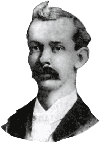
In 1912 a chemists by the name of Wilbur Scoville, working for the Parke-Davis pharmaceutical company, developed a method to measure the heat level of chile peppers. The test is named after him, the "Scoville Organoleptic Test". It is a subjective dilution-taste procedure. In the original test, Wilbur blended pure ground Chiles with sugar-water and a panel of "testers" then sipped the solution, in increasingly diluted concentrations, until they reached the point that the liquid no longer burned their mouths. A number was then assigned to each chile pepper based on how much it needed to be diluted before they could no longer taste (feel) the heat. |
||
The pungency (or heat factor) of chile peppers is measured in multiples of 100 units. The sweet bell peppers at zero Scoville units to the mighty Naga Jolokia (Ghost Pepper) at over 1,000,000 Scoville units! One part of chile "heat" per 1,000,000 drops of water is rated at only 1.5 Scoville Units. The substance that makes a chile so hot is called Capsaicin (cap-say-ah-sin). Pure Capsaicin rates between 15,000,000 and 16,000,000 Scoville Units! Today more scientific and accurate methods like Electrochemistry and High Performance Liquid Chromatography (HPLC) are used to determine capsaicin levels. In honor of Dr. Wilbur the unit of measure is still named Scoville. Below is a list of Chile peppers and their Scoville Heat Units. Due to variations in growing conditions, soil and weather, peppers tend to vary between the lower and upper levels listed, but can go beyond them. |
|||
 = Click to purchase Pepper Seeds
 = Click to purchase Chile Powders
 = Click to purchase Dried Peppers
Official World's Largest List Of
Scoville Heat Unit Rated
Chile Pepper |
Heat Range |
|
| All Sweet Bells |
0
|
|
| Aconcagua |
0
|
|
| Aji Chuncho |
0
|
|
| Aladdin |
0
|
|
| Branco Diamante |
0
|
|
| Carliston |
0
|
|
| Carmagnola Rosso |
0
|
|
| Corno Verde |
0
|
|
| Corona |
0
|
|
| Cuneo Giallo |
0
|
|
| Diamond White |
0
|
|
| Dove |
0
|
|
| Early Sunsation |
0
|
|
| Etham |
0
|
|
| Figaro |
0
|
|
| Filfil Darah |
0
|
|
| Fushimi |
0
|
|
| Gigante |
0
|
|
| Greygo |
0
|
|
| Hershey |
0
|
|
| Hungarian Wax |
0
|
|
| Islander |
0
|
|
| Jimmy Nardello |
0
|
|
| Jingle Bells |
0
|
|
| Jupiter |
0
|
|
| Kaala |
0
|
|
| Kandil |
0
|
|
| Marconi Purple |
0
|
|
| NuMex Conquistador |
0
|
|
| Orage Sun |
0
|
|
| Pimento |
0
|
Purple Beauty |
0
|
| Quadrato D'Asti |
0
|
|
| Sweet Banana |
0
|
|
| Tangerine |
0
|
|
| Hot Navajo |
50 ~ 150
|
|
| Paprika-Super Red |
50 ~ 200
|
|
|
|
Hot Cherry |
50 ~ 500
|
| Avalon Button |
100 ~ 500
|
|
| Babura Zelena |
100 ~ 500
|
|
| Baldi |
100 ~ 500
|
|
| Cachucha |
100 ~ 500
|
|
| Cambuci |
100 ~ 500
|
|
| Catarina |
100 ~ 500
|
|
| Chilhuacle |
100 ~ 500
|
|
| Corbaci |
100 ~ 500
|
|
| Criollo |
100 ~ 500
|
|
| Feher Ozon Paprika |
100 ~ 500
|
|
| Frutka |
100 ~ 500
|
|
| Georgescu Chocolate |
100 ~ 500
|
|
| Guajilla de Zihutenejo |
100 ~ 500
|
|
| Karlo |
100 ~ 500
|
|
| Keystone Giant |
100 ~ 500
|
|
| NuMex Sunburst |
100 ~ 500
|
|
| Pepperoncini |
100 ~ 500
|
|
| NuMex Eclipse |
300 ~ 500
|
|
| Sonora |
300 ~ 600
|
|
| Holy Mole |
400 ~ 700
|
|
| NuMex Suave Orange |
500 ~ 850
|
|
| NuMex Suave Red |
500 ~ 850
|
|
| El-Paso |
500 ~ 700
|
|
| Santa Fe Grande |
500 ~ 750
|
|
| Cubanelle |
300 ~ 1,000
|
|
| Agua Blanca |
500 ~ 1,000
|
|
| NuMex R Naky |
500 ~ 1,000
|
|
| Ametista |
500 ~ 1,000
|
|
| Beaver Dam |
500 ~ 1,000
|
|
| Bedgi |
500 ~ 1,000
|
|
| Biquinho |
500 ~ 1,000
|
|
| Brinco de Princesa |
500 ~ 1,000
|
|
| Calistan |
500 ~ 1,000
|
|
| Escabeche |
500 ~ 1,000
|
|
| Gana Redonda |
500 ~ 1,000
|
|
| NuMex Sunflare |
500 ~ 1,000
|
|
| NuMex Sunglo |
500 ~ 1,000
|
|
| NuMex Sunrise |
500 ~ 1,000
|
|
| NuMex Twilight |
800 ~ 1,000
|
|
| Peppadew |
900 ~ 1,200
|
|
| Romanian Hot |
800 ~ 1,400
|
|
| Georgia Flame |
1,000 ~ 1,500
|
|
| Achar |
1,000 ~ 1,500
|
|
| Aji Panca |
1,000 ~ 1,500
|
|
| Almapaprika |
1,000 ~ 1,500
|
|
| Dedo de Moca |
1,000 ~ 1,500
|
|
| Mulato Isleño |
1,000 ~ 1,500
|
|
| TAM Mild Jalapeno |
1,000 ~ 1,500
|
|
| Poblano |
500 ~ 2,000
|
|
| Espanola |
1,000 ~ 2,000
|
|
| Ancho |
1,000 ~ 2,000
|
|
| Mulato |
1,000 ~ 2,000
|
|
| Pasilla |
1,000 ~ 2,000
|
|
| NuMex Española |
1,500 ~ 2,000
|
|
| Anaheim |
500 ~ 2,500
|
|
| Sandia |
500 ~ 2,500
|
|
| Cascabel |
1,000 ~ 2,500
|
|
| Poinsettia |
1,300 ~ 2,500
|
|
| Aji Andina |
1,000 ~ 2,500
|
|
| Aji Benito |
1,000 ~ 2,500
|
|
| Alcalde |
1,300 ~ 2,500
|
|
| Ammazzo |
1,300 ~ 2,500
|
|
| Calabria |
1,300 ~ 2,500
|
|
| NuMex Big Jim |
1,500 ~ 2,500
|
|
| Rocotillo |
1,500 ~ 2,500
|
|
|
|
Peter |
1,500 ~ 2,500
|
| Pulla |
700 ~ 3,000
|
|
| Puya |
900 ~ 3,000
|
|
| Merah |
2,000 ~ 3,200
|
|
| NuMex Joe E. Parker |
1,500 ~ 3,500
|
|
| Espelette |
1,200 ~ 4,000
|
|
| Cascabella |
1,500 ~ 4,000
|
|
| San Ardo |
1,500 ~ 4,000
|
|
| Big Jim Heritage |
2,000 ~ 4,000
|
|
| Brazilian Starfish |
2,000 ~ 4,000
|
|
| Espanola Improved |
2,000 ~ 4,000
|
|
| Dhamraj |
3,500 ~ 4,300
|
|
| Caloro |
1,000 ~ 5,000
|
|
| Cyklon |
1,000 ~ 5,000
|
|
| Nosegay |
1,000 ~ 5,000
|
|
| NuMex Centennial |
1,000 ~ 5,000
|
|
| Pimientos de Padrón |
1,000 ~ 5,000
|
|
| Bulgarian Carrot |
2,000 ~ 5,000
|
|
| NuMex Primavera |
2,000 ~ 5,000
|
|
| Ubatuba Cambuci |
2,000 ~ 5,000
|
|
| Atomic Heart |
2,500 ~ 5,000
|
|
| Azr |
2,500 ~ 5,000
|
|
| Baccio di Satana |
2,500 ~ 5,000
|
|
| Bermuda |
2,500 ~ 5,000
|
|
| Bouquet |
2,500 ~ 5,000
|
|
| Cenoura Búlgara |
2,500 ~ 5,000
|
|
| Cereja |
2,500 ~ 5,000
|
|
| Chilaca |
2,500 ~ 5,000
|
|
| Chilcostle |
2,500 ~ 5,000
|
|
| Chile de Cuscutlan |
2,500 ~ 5,000
|
|
| Chintexle |
2,500 ~ 5,000
|
|
| Cochabamba |
2,500 ~ 5,000
|
|
| Cochiti |
2,500 ~ 5,000
|
|
| Costeño |
2,500 ~ 5,000
|
|
| Costeño Amarillo |
2,500 ~ 5,000
|
|
| Dhanraj |
2,500 ~ 5,000
|
|
| Equador Roxa |
2,500 ~ 5,000
|
|
| Floral Gem |
2,500 ~ 5,000
|
|
| Fogo Explosivo |
2,500 ~ 5,000
|
|
| Fresno Supreme |
2,500 ~ 5,000
|
|
| Goan |
2,500 ~ 5,000
|
|
| Golden Nugget |
2,500 ~ 5,000
|
|
| Guajillo |
2,500 ~ 5,000
|
|
| Gulbarga |
2,500 ~ 5,000
|
|
| Guntur |
2,500 ~ 5,000
|
|
| Hari Mirch |
2,500 ~ 5,000
|
|
| Hidalgo |
2,500 ~ 5,000
|
|
| Huachinango |
2,500 ~ 5,000
|
|
| Huasteco |
2,500 ~ 5,000
|
|
| Huatulco Puntado |
2,500 ~ 5,000
|
|
| Inca |
2,500 ~ 5,000
|
|
| Inchanga |
2,500 ~ 5,000
|
|
| Isleta |
2,500 ~ 5,000
|
|
| Jemes |
2,500 ~ 5,000
|
|
| Kalia |
2,500 ~ 5,000
|
|
| Kerinting |
2,500 ~ 5,000
|
|
| Kori Sitakame |
2,500 ~ 5,000
|
|
| Mirasol |
2,500 ~ 5,000
|
|
| NuMex Rio Grande |
2,500 ~ 5,000
|
|
| Volcano |
2,500 ~ 5,000
|
|
| Goat Horn |
3,000 ~ 5,000
|
|
| NM 6-4 Heritage |
3,000 ~ 5,000
|
|
| Chimayo |
4,000 ~ 6,000
|
|
| Hatch Green |
5,000 ~ 6,000
|
|
| Barker's Hot |
5,00 ~ 7,000
|
|
|
|
Chipotle |
5,000 ~ 8,000
|
| Fresno |
2,500 ~ 8,500
|
|
| Long Thick Cayenne |
6,000 ~ 8,500
|
|
| Jalapeño |
2,500 ~ 8,000
|
|
| Pretty Purple |
4,000 ~ 8,000
|
|
| Purple Tiger 'Trifetti' |
4,000 ~ 9,000
|
|
| Hot Wax |
5,000 ~ 9,000
|
|
| Sandia Hot |
7,000 ~ 9,000
|
|
| Earbob |
3,000 ~ 10,000
|
|
| Hungarian Hot Wax |
5,000 ~ 10,000
|
|
| NuMex Sandia |
5,000 ~ 10,000
|
|
| Kung Pao |
8,000 ~ 10,000
|
|
| Lumbre Hot |
9,000 ~ 10,000
|
|
| Chili Maya |
8,000 ~ 11,000
|
|
| Abbraccio |
5,000 ~ 15,000
|
|
| Afegã Curta |
5,000 ~ 15,000
|
|
| Aji Cobincho |
5,000 ~ 15,000
|
|
| Balãozinho |
5,000 ~ 15,000
|
|
| Bishop's Crown |
5,000 ~ 15,000
|
|
| Cseresznye Paprika |
5,000 ~ 15,000
|
|
| Dutch Red |
5,000 ~ 15,000
|
|
| Estrela-do-Mar |
5,000 ~ 15,000
|
|
| Israeli Hot |
5,000 ~ 15,000
|
|
| Jarales |
5,000 ~ 15,000
|
|
| Aji Bento |
9,000 ~ 15,500
|
|
| Hidalgo |
6,000 ~ 17,000
|
|
| Aji Escabeche |
12,000 ~ 17,000
|
|
| Serrano |
8,000 ~ 22,000
|
|
| Tears Of Fire |
19,000 ~ 23,600
|
|
| Peruvian Purple |
15,000 ~ 25,000
|
|
| Tian Ying |
18,000 ~ 25,000
|
|
| Gambia |
18,000 ~ 26,500
|
|
| Stumpy |
10,000 ~ 27,000
|
|
|
|
Bolivian Rainbow |
10,000 ~ 28,000
|
| Punjab |
21,000 ~ 29,500
|
|
| Cabai Burong |
5,000 ~ 30,000
|
|
| Cabai Merah Besar |
5,000 ~ 30,000
|
|
| Fish Pepper |
5,000 ~ 30,000
|
|
| Holiday Cheer |
5,000 ~ 30,000
|
|
| Hot Portugal |
5,000 ~ 30,000
|
|
| Inca Red Drop |
5,000 ~ 30,000
|
|
| New Delhi Long |
5,000 ~ 30,000
|
|
| Onza Red |
5,000 ~ 30,000
|
|
| Onza Yellow |
5,000 ~ 30,000
|
|
| Orozco |
5,000 ~ 30,000
|
|
| Royal Black |
5,000 ~ 30,000
|
|
| Black Prince |
10,000 ~ 30,000
|
|
| Takanotsume |
10,000 ~ 30,000
|
|
| Manzano |
12,000 ~ 30,000
|
|
| Shipkas |
12,000 ~ 30,000
|
|
| Abchazskij Ostruyi |
15,000 ~ 30,000
|
|
| Afega Longa |
15,000 ~ 30,000
|
|
| Aji Carmine |
15,000 ~ 30,000
|
|
| Aji Criolla Sella |
15,000 ~ 30,000
|
|
| Assam |
15,000 ~ 30,000
|
|
| Ata Barukono |
15,000 ~ 30,000
|
|
| Australian Latern |
15,000 ~ 30,000
|
|
| Berbere |
15,000 ~ 30,000
|
|
| Beslers Cherry |
15,000 ~ 30,000
|
|
| Bode Amarela |
15,000 ~ 30,000
|
|
| Bombilla Amarilla |
15,000 ~ 30,000
|
|
| Bonanza Brasileira |
15,000 ~ 30,000
|
|
| Bubba |
15,000 ~ 30,000
|
|
| Caballero |
15,000 ~ 30,000
|
|
| Chao Tian Jiao |
15,000 ~ 30,000
|
|
| Cheyenne |
15,000 ~ 30,000
|
|
| Chi Chien |
15,000 ~ 30,000
|
|
| Chile Inayague |
15,000 ~ 30,000
|
|
| Chile Maya |
15,000 ~ 30,000
|
|
| Chile Pepe |
15,000 ~ 30,000
|
|
| Chilito de Simojovel |
15,000 ~ 30,000
|
|
| Chinchi Uchu |
15,000 ~ 30,000
|
|
| Chivato |
15,000 ~ 30,000
|
|
|
|
De Arbol |
15,000 ~ 30,000
|
| Dedo de Bahamas |
15,000 ~ 30,000
|
|
| Erva de Bode |
15,000 ~ 30,000
|
|
| Gâmbia Vermelha |
15,000 ~ 30,000
|
|
| Golden Heat |
15,000 ~ 30,000
|
|
| Hahony Kacho |
15,000 ~ 30,000
|
|
| Havaiana |
15,000 ~ 30,000
|
|
| Inca Glow |
15,000 ~ 30,000
|
|
| Inca Laranja |
15,000 ~ 30,000
|
|
| Kim Chi |
15,000 ~ 30,000
|
|
| NuMex Barker's Hot |
15,000 ~ 30,000
|
|
| Pimenta de Bode |
15,000 ~ 30,000
|
|
| Serrano Tampiqueño |
15,000 ~ 30,000
|
|
| Black Pearl |
20,000 ~ 30,000
|
|
| Chupetinho |
20,000 ~ 30,000
|
|
| Little Elf |
20,000 ~ 30,000
|
|
| Jwala |
20,000 ~ 30,000
|
|
| Dundicut |
20,000 ~ 40,000
|
|
| Beni Highland |
31,500 ~ 42,600
|
|
| Jaloro |
30,000 ~ 50,000
|
|
|
|
Aji |
30,000 ~ 50,000
|
| NuMex Luci Fairy |
30,000 ~ 50,000
|
|
| Aci Sivri |
30,000 ~ 50,000
|
|
| Akabare |
30,000 ~ 50,000
|
|
| Aurora |
30,000 ~ 50,000
|
|
| Bonney |
30,000 ~ 50,000
|
|
| Jaloro |
30,000 ~ 50,000
|
|
|
|
Aji |
30,000 ~ 50,000
|
| Coban |
30,000 ~ 50,000
|
|
| Cumari |
30,000 ~ 50,000
|
|
| Demre |
30,000 ~ 50,000
|
|
| Desi Teekhi |
30,000 ~ 50,000
|
|
| Dhani |
30,000 ~ 50,000
|
|
| Dieng Plateau |
30,000 ~ 50,000
|
|
| Diente de Perro |
30,000 ~ 50,000
|
|
| Dong Xuan |
30,000 ~ 50,000
|
|
| Dunso |
30,000 ~ 50,000
|
|
| Etna |
30,000 ~ 50,000
|
|
| Faria |
30,000 ~ 50,000
|
|
| Guarani |
30,000 ~ 50,000
|
|
| Hermosillo |
30,000 ~ 50,000
|
|
| DKurnool |
30,000 ~ 50,000
|
|
| Maras Biber |
30,000 ~ 50,000
|
|
| Purple Prince |
30,000 ~ 50,000
|
|
| Lemon Drop |
30,000 ~ 50,000
|
|
| Tabasco |
30,000 ~ 50,000
|
|
| Cayenne |
30,000 ~ 50,000
|
|
| Fiji |
30,000 ~ 50,000
|
|
| Filius Blue |
30,000 ~ 50,000
|
|
| Pusa Jwala |
30,000 ~ 50,000
|
|
| Urfa Biber |
30,000 ~ 50,000
|
|
| Santaka |
40,000 ~ 50,000
|
|
| NuMex Piñata |
40,000 ~ 50,000
|
|
| Super Chile |
40,000 ~ 50,000
|
|
| African Pequin |
40,000 ~ 57,000
|
|
| Piquin |
40,000 ~ 58,000
|
|
| Prik Kee Noo |
50,000 ~ 70,000
|
|
| Tien Tsin |
50,000 ~ 70,000
|
|
| NuMex XX Hot |
60,000 ~ 70,000
|
|
| Yatsafusa |
50,000 ~ 75,000
|
|
| Red Amazon |
55,000 ~ 75,000
|
|
| Haimen |
70,000 ~ 80,000
|
|
| Suryaki Cluster |
65,000 ~ 81,400
|
|
|
|
Chiltecpin |
60,000 ~ 85,000
|
| Ring of Fire |
70,000 ~ 85,000
|
|
| Cili Goronong |
50,000 ~ 100,000
|
|
| Aji Charapa |
50,000 ~ 100,000
|
|
|
|
Thai |
50,000 ~ 100,000
|
| Diablo Grande |
60,000 ~ 100,000
|
|
| Malagueta |
60,000 ~ 100,000
|
|
| Charleston |
70,000 ~ 100,000
|
|
| Pico de Pajaro |
70,000 ~ 100,000
|
|
| Merah |
85,000 ~ 100,000
|
|
| Aji Cito |
85,000 ~ 108,000
|
|
| Bahamian |
95,000 ~ 110,000
|
|
| Tabiche |
85,000 ~ 115,000
|
|
| Bahamian |
95,000 ~ 110,000
|
|
| Assam |
75,000 ~ 121,000
|
|
| Carolina Cayenne |
100,000 ~ 125,000
|
|
| Thai Dragon |
75,000 ~ 140,000
|
|
| Limo Blanco |
100,000 ~ 150,000
|
|
| Cajamarca |
125,000 ~ 150,000
|
|
| Kumataka |
125,000 ~ 150,000
|
|
| Sparkler |
100,000 ~ 160,000
|
|
| Rooster Spur |
120,000 ~ 170,000
|
|
| Ecuador Hot |
145,000 ~ 186,000
|
|
| Bahamian |
125,000 ~ 300,000
|
|
| Jamaican Hot |
100,000 ~ 200,000
|
|
| Birds Eye |
100,000 ~ 225,000
|
|
| Maori |
80,000 ~ 240,000
|
|
| Quintisho |
100,000 ~ 240,000
|
|
| Pimenta de Neyde |
100,000 ~ 250,000
|
|
| Rocoto / Manzano |
125,000 ~ 250,000
|
|
| Madame Jeanette |
175,000 ~ 250,000
|
|
|
|
Tepin (Wild) |
100,000 ~ 265,000
|
|
|
Texas Chiltepin |
100,000 ~ 265,000
|
| Datil |
100,000 ~ 300,000
|
|
| Zimbabwe Bird |
180,000 ~ 300,000
|
|
|
|
Devil Tongue |
125,000 ~ 325,000
|
|
|
Fatalii |
125,000 ~ 325,000
|
| White Habanero |
130,000 ~ 325,000
|
|
| Orange Habanero |
150,000 ~ 325,000
|
|
| Scotch Bonnet |
90,000 ~ 325,000
|
|
| TigrePaw-NR |
265,000 ~ 348,000
|
|
| Adjuma |
150,000 ~ 350,000
|
|
| Caribbean Red |
120,000 ~ 400,000
|
|
|
|
Choclate Habanero |
325,000 ~ 425,000
|
| Aribibi Gusano |
300,000 ~ 470,000
|
|
| Aji Chombo |
100,000 ~ 500,000
|
|
| Pingo de Ouro |
100,000 ~ 500,000
|
|
|
|
Red Savina Habanero |
350,000 ~ 575,000
|
| Habanaga |
500,000 ~ 800,000
|
|
| Nagabon |
750,000 ~ 800,000
|
|
| Raja Mirch |
800,000 ~ 900,000
|
|
| Dorset Naga |
800,000 ~ 970,000
|
|
| Naga Morich |
770,000 ~ 1,034,910
|
|
| Infinity |
800,000 ~ 1,067,286
|
|
| Naga Gibralta |
900,000 ~ 1,086,844
|
|
| Naga Viper |
800,000 ~ 1,382,118
|
|
|
|
Trinidad Scorpion |
1,029,000 ~ 1,390,000
|
|
|
Naga Jolokia "Ghost Pepper" |
1,020,000 ~ 1,578,000
|
| Choclate 7 Pot |
1,169,000 ~ 1,850,000
|
|
|
|
Moruga Scorpion | 1,200,000 ~ 2,009,231 |
| Carolina Reaper |
1,200,000 ~ 2,100,000
|
|
| Common Pepper Spray | 2-3,000,000 | |
| Police Grade Spray | 5,300,000 | |
| Homodihydrocapsaicin | 8,600,000 | |
| Nordihydrocapsaicin | 9,100,000 | |
| Pure Capsaicin | 15-16,000,000 | |
Read About: World's Hottest Pepper
A Little Chile Chemistry For
The Visiting Rocket Scientist
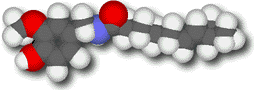
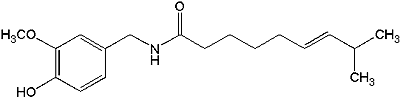
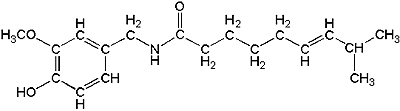
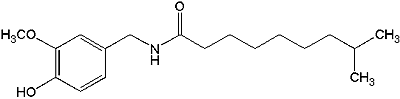
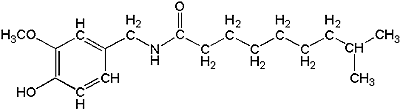
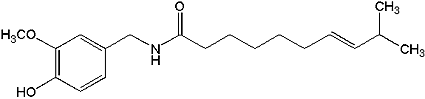
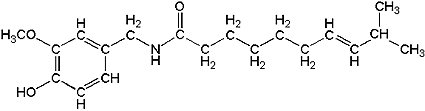
Chiles are members of the Capsicum family. The heat range is diverse, ranging from very mild to extremely wild. The particular class of substances that determine their disposition is known, by those who study such things, as Capsaicinoids. The two most common component of this class are Capsaicin and Di-Hydrocapsaicin they looks something like this.
            H3CO
              \____       O            CH3
              /    \      |            |
          HO-<      >-C-N-C-(CH2)4-C=C-C-CH3
              \____/  | |          | | |
                     H2 H          H H H
             H3CO
               \____       O        CH3
               /    \      |        |
           HO-<      >-C-N-C-(CH2)6-C-CH3
               \____/  | |
                      H2 H
Capsaicin and Di-hydrocapsaicin together make up 80-90% of the Capsaicinoids found in Chile peppers. In the Capsicum annum species, the total Capsaicinoid content ranges from 0.1 to 1.0%, and the Capsaicin to Dihydrocapsaicin ratio is about 1:1. In Capsicum frutescens the total content ranges from 0.4-1.0% with the ratio around 2:1.
The minor Capsaicinoids include Nordihydrocapsaicin [Dihydrocapsaicin with a (CH2)5 instead of (CH2)6], Homocapsaicin [Capsaicin with a (CH2)5 instead of (CH2)4, and Homodihydrocapsaicin [Dihydrocapsaicin with a (CH2)7 instead of (CH2)6].
The different capsaicin-like compounds found in Chiles have slight structural variations in the hydrocarbon tail, changing their ability to bind to the nerve receptors and their ability to penetrate layers of receptors on the tongue, mouth, and throat. This may explain why some Chiles burn in the mouth, while others burn deep in the throat.
Capsaicinoids are not soluble in water, but very soluble in fats, oils and alcohol. This is why drinking water after accepting a dare to eat an extra hot Habanero Chile won't stop the burning. Downing a cold beer is the traditional remedy, but the small percentage of alcohol will not wash away much capsaicin. To get some relief from a chile burn (can't think of a good reason not to "Enjoy the heat"), drink milk or eat ice-cream. Milk contains casein, a lipophilic (fat-loving) substance that surrounds and washes away the fatty capsaicin molecules in much the same way that soap washes away grease.
The perception that peppers are "hot" is not an accident. The capsaicin key opens a door in the cell membrane that allows calcium ions to flood into the cell. That ultimately triggers a pain signal that is transmitted to the next cell. When the cells are exposed to heat, the same events occur. Chile burns and heat burns are similar at the molecular, cellular, and sensory levels.
Paradoxically, capsaicin's ability to cause pain makes it useful in alleviating pain. Exposure to capsaicin lowers sensitivity to pain, and it is applied as a counter irritant in the treatment of arthritis and other chronically painful conditions.
The capsaicinoids are unique compared to other spicy substances, such as piperine (black pepper) and gingerol (ginger) in that capsaicin causes a long-lasting selective desensitization to the pain and discomfort, as a result of repeated doses. The result is an increasing ability to tolerate ever hotter foods and permits one to assume the title of "Chile-Head" or "CH" for short.
People that eat lots of spicy capsaicin-rich foods build up a tolerance to it. The incentive: Once a person has become somewhat desensitized to the extreme heat of the "hotter" Chiles, he or she can starts on a new culinary journey. Not being over powered by the heat factor, the palate now has the ability to explore the many diverse flavors offered by the myriad of different Chiles that are currently available from around the world. Also for some Chile-Heads a good jolt of capsaicin excites the nervous system into producing endorphins, which promote a pleasant sense of well-being that can last several hours. The endorphin lift or "high", makes spicy foods mildly addictive and for some, an obsession.
I offer the below information and pictures for folks that are
really into the science of Chiles.
Date: Mon, 26 Feb 2001
Uncle Steve,
Here are the images as promised. I included structures of some of the minor capsaicinoids as well.
There are two versions (a and b) of each structure, corresponding
to different conventions of drawing. They're equally correct and
unequivocal, and you're free to choose whichever version you
prefer. The 'a' convention is most commonly used by chemists, but
the 'b' convention might be a bit easier to understand for
non-chemists.
Best regards,
John Henninge
Capsaicin-b
Dihydrocapsaicin-a
Dihydrocapsaicin-b
Homocapsaicin-a
Homocapsaicin-b
Homodihydrocapsaicin-a
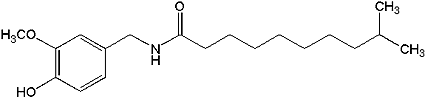
Homodihydrocapsaicin-b
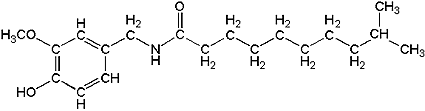
Nordihydrocapsaicin-a
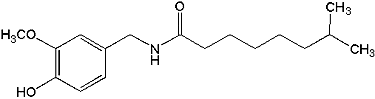
Nordihydrocapsaicin-b
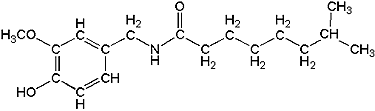
Last but not least (Just in case you want to know all about Capsaicinoids)
Melting point: 65 ° C
Boiling point: 210-220 ° C at 0.01 torr pressure
Sorce: The Merck Index. 12th Edition. Merck & Co., Inc.
Whitehouse Station, NJ. 1996.
Still need more HOT Chile Pepper information?
Who was Wilbur Scoville?
What is The World's Hottest Chile?
Hot Chile Pepper Medical Uses
Hot Sauce Scoville Ratting
Uncle Steve's HOT Stuff
